Arthur Caplan
Five Days at MemorialArthur Caplan is a bioethicist whose role in the Memorial case was to interpret the alleged acts of health professionals through the history of ethics, law, and social norms. Coroner Frank Minyard’s legal task was to determine whether deaths were homicides in the technical sense of resulting from human intervention. Wanting a broader account of what the evidence meant, Minyard sought Caplan’s view before the case went to a grand jury. Caplan’s contribution was not simply to classify the deaths: he asked what kind of care had been given, what its purpose could have been, and whether the disaster changed the boundaries of acceptable medical practice.
Role in the Memorial Inquiry
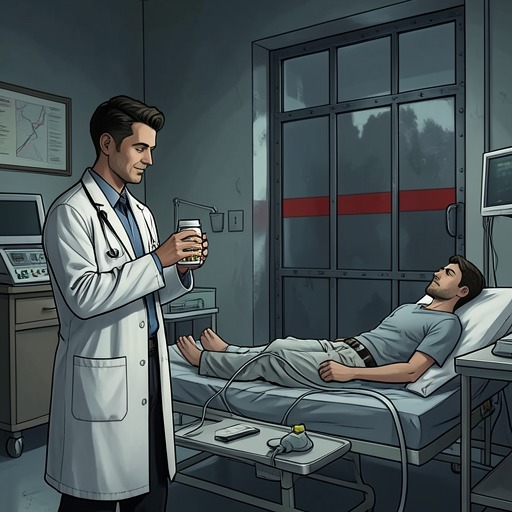
Caplan had already appeared on CNN after the allegations emerged, suggesting that a jury might regard exceptionally severe circumstances as a defense in a mercy-killing case. That early observation did not predetermine his later assessment of the evidence. At Minyard’s request, Caplan reviewed the records of the nine LifeCare patients on the seventh floor of Memorial. He concluded that all nine had been euthanized and that the way the drugs were administered did not accord with the ethical standards of palliative care then prevailing in the United States.
The central distinction in Caplan’s assessment was between intending to relieve suffering and making a patient’s death the goal of treatment. In his account of accepted U.S. practice, a patient’s death could not be the intended therapeutic objective. This made the purpose of the medication crucial: describing an intervention as comfort care did not, by itself, establish that it met palliative-care standards. Caplan’s conclusion placed the question of intention alongside the medical record and the circumstances in which the drugs were given.
The Evidence and the Standards of Care
Caplan considered how the pattern of medication use measured against ordinary safeguards. If the purpose on Thursday, September 1, had been solely to ease pain and discomfort, he expected records showing that medicines were introduced gradually and carefully. The apparent rapid introduction of large amounts of drugs known to be lethal, without prior use of those drugs in the patients, troubled him. He was also concerned that at least some patients did not appear to be terminally ill, and that no effort seemed to have been made to consult family members present at Memorial.
Documentation mattered in part because the circumstances did not make it impossible. Doctors, including Anna Pou, had written some medication orders by hand during the disaster before midday on Thursday. Caplan treated those records as evidence that recording treatment was difficult but feasible; he noted that even hospitals operating in wartime kept records. The point was not that normal conditions had continued at Memorial, but that an emergency did not automatically erase the need to establish what was administered and why. On the evidence he reviewed, Caplan was not persuaded that killing had been the only way to relieve patients’ pain or distress.
A Framework for Aid in Dying
Caplan situated the Memorial allegations within a long-running debate about aid in dying. He organized that debate along two separate questions: whether the patient had requested death, and whether the intervention was active or passive. The first distinguished voluntary from involuntary participation; the second distinguished giving drugs from withdrawing or not initiating life-sustaining treatment. Together, those axes created four categories—voluntary and involuntary, active and passive—that clarified why apparently similar end-of-life cases might raise different ethical and legal issues.
This framework also kept the Memorial inquiry from collapsing into a single question of compassion. Whether a death is described as merciful does not settle whether the patient consented, whether a clinician actively caused it, or whether the action belonged within accepted care. Caplan’s analysis treated those as distinct matters. His concern was that the facts of the case had to be examined rather than resolved by a general appeal to the extremity of the disaster.
Law, Compassion, and Public Judgment
Caplan understood that criminal cases involving physicians who hastened death rarely ended in murder convictions when jurors believed the motive was compassionate. He pointed to studies of twenty alleged-euthanasia cases from 1973 and 1987, in which only three resulted in prison sentences, each marked by unusual circumstances, including questions about whether the patient was terminally ill and suffering. He also cited cases in which doctors were acquitted after intentionally killing patients with lethal interventions, sometimes on technical grounds.
The case of Jack Kevorkian illustrated, for Caplan, how the legal and ethical questions could shift with the physician’s role. Kevorkian avoided first-degree-murder convictions in several cases involving patients who operated his assisted-suicide devices themselves. He was eventually convicted of second-degree murder after videotaping himself administering drugs to Thomas Youk, a patient with Lou Gehrig’s disease. Kevorkian later said that he had wanted imprisonment to redirect public debate from assisted suicide toward euthanasia. Caplan’s discussion of such precedents showed why a compassionate motive could affect juries without answering the separate question of what medical ethics permitted.
An Unsettled Moral Question
Caplan was troubled that bioethicists had generally avoided offering public judgments about Memorial. Some believed the conditions were too terrible for moral conclusions; others may have feared exposing a broader, rarely discussed practice of assisted suicide or euthanasia. Caplan rejected the assumption that the extremity of the setting made ethical analysis impossible. For him, the question of why Memorial should be exempt from scrutiny had no satisfactory answer.
He warned that without formal analysis, the case would remain an unresolved ethical problem. His position did not reduce the disaster to ordinary clinical conditions, nor did it treat compassion as irrelevant. Instead, it insisted that emergency circumstances, patient consent, clinical intention, medication practices, and documentation be examined together. In the book’s account, Caplan serves as a counterweight both to a purely technical ruling on homicide and to the idea that disaster itself settles the moral question. His intervention makes the case’s unresolved lesson explicit: extreme conditions may complicate judgment, but they do not remove the need to ask what clinicians did and what standards should govern such decisions.